Empowering young changemakers through innovative leadership training
From 16–18 February 2026, 32 young Scouts in Dar es Salaam, Tanzania, participated in the International Leadership Training (ILT), designed to equip them not only as leaders, but as changemakers.
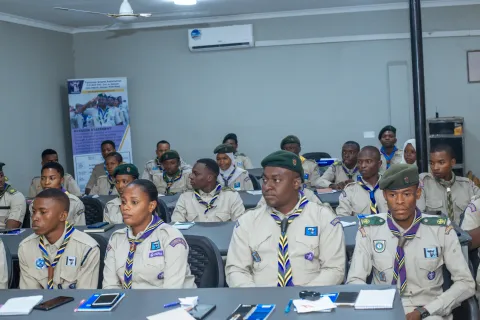
Delivered in Kiswahili to ensure inclusion and meaningful participation, the highly interactive training strengthened leadership, communication, and project management skills. More importantly, it nurtured the mindset of a changemaker, someone who leads with empathy, resilience, and a commitment to transforming systems, not just solving immediate problems.
The training was directed by changemaking expert and WOSM Consultant Ivy Karushi, who applied adaptive and peer-learning approaches such as “think–pair–share” to build confidence and ownership among participants. Explaining the rationale behind delivering the training in Kiswahili and using peer learning methods, Ivy shared:
A key highlight was the “project clinic,” where participants presented their initiatives and received structured peer feedback. Several agribusiness ideas emerged, sparking conversations about cross-district collaboration. This became a defining moment, as participants began thinking beyond individual projects toward collective impact and regional scaling.
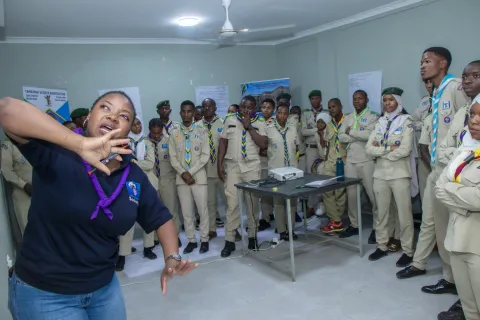
The strength of this approach was evident when one participant struggled to refine his initial project idea. Instead of moving ahead without him, fellow Scouts paused their work and gathered around, asking reflective questions about his passions and strengths. Through this process, he reshaped his idea into one that felt authentic and achievable.
Reflecting on the experience, Abdallah Ally Waziri shared:
This moment embodied the true spirit of Scouting: young people supporting one another, practising empathy, and recognising that leadership is exercised in partnership.
This edition of the ILT offered participants real-life experiences beyond theoretical learning. Simon Mtambai, a youth social entrepreneur from Tanzania and the founding director of a youth-led social innovation firm, was part of the training team and shared practical insights that Scouts could learn from. His involvement not only enriched the learning experience but also established a strong support system to nurture and grow the Scouts’ ideas into sustainable initiatives.
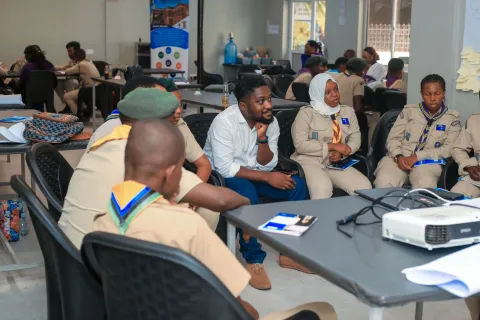
As an Ashoka Fellow, Simon will further strengthen this journey through ongoing mentorship and support, made possible by the Ashoka–World Scouting partnership, helping to ensure the outcomes of the training remain both sustainable and scalable. This approach moves beyond purely theoretical learning, which often lacks continued support and real-life inspiration.
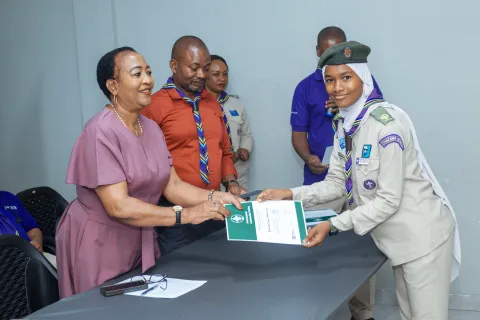
The training demonstrated that nurturing changemakers requires inclusive spaces, adaptive learning, and trust in young people’s potential. As innovation in youth programme design and delivery remains central to WOSM’s strategy, this International Leadership Training stands as a strong reflection of that commitment in action. We sincerely appreciate the World Scout Foundation and the Eric Frank Trust for their support in making this training possible.