Scouts in Tunisia take action for a safer digital world
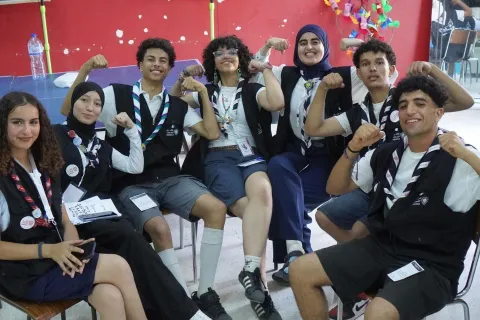
Like in many places around the globe, children in Tunisia don’t have to leave their homes to connect with the wider world - a phone in their hands is all it takes. Roughly 76% of Tunisian children aged 10 to 17 go online almost every day, spending up to four hours a day online during the school year and six hours during the holidays. With digital spaces playing such a significant role in their lives, ensuring those spaces are safe is increasingly important.
Around 90 percent of children who use the internet in Tunisia face some form of online risk, including grooming, cyberbullying, malware, and identity theft. This raises an important question: how can children and young people explore the digital world while staying safe?
The Tunisian Scouts set out to answer that question through "Digital Safety for Scouts", a Messengers of Peace project that equips young people and the adults who support them with the knowledge and skills to navigate the internet safely and confidently.
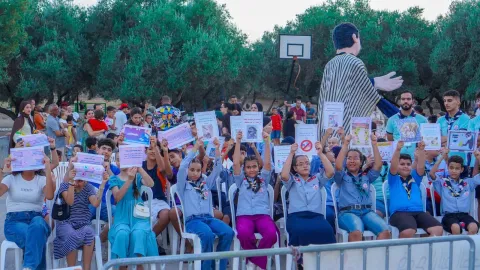
The project works with Scouts and Guides aged 8 to 18, as well as parents, educators, and Scout leaders, with the idea that those who gain knowledge and support can, in turn, pass it on to others.
Its objectives are clear: help children and young people use the internet with confidence; empower them to recognise and respond to risks; give parents and teachers practical tools to protect children; and build a culture that values privacy and responsible online behaviour.

Building the action plan
The project began modestly in April with two remote meetings and plenty of ideas. One month later, these had developed into a full action plan with a clear methodology, defined roles, and plans to involve 2,000 participants, train 50 Peace Ambassadors, and reach thousands more as agents of change.
The ambassadors completed ten intensive training sessions covering topics such as child psychology and the risks of digital spaces, as well as communication, listening skills, report writing, partnership-building, and designing awareness campaigns. They then came together at a training camp centred around a single theme: how to build safer digital spaces.

Creating real impact
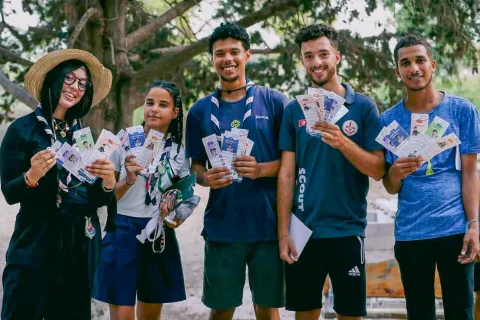
The response to the project exceeded all expectations. More than 6,700 children, young people, parents, and teachers have so far already benefited either directly or indirectly. Behind those numbers are practical changes in how children and adults approach the digital world: children who are better equipped to recognise and respond to risks, and adults with more tools to support safer online spaces.
Expert partnerships also played an important role. Tunisia’s National Agency for Computer Security (ANCS) provided technical expertise for training the ambassadors and prepared the awareness guides. Psychology specialists helped strengthen understanding of the digital world's impact on a child's growth and behaviour, and sociology specialists shed light on the social and family dimensions of these risks.

Turning knowledge into action
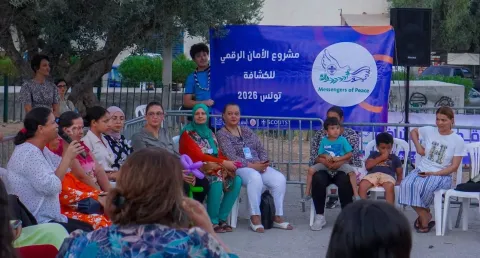
"Digital Safety for Scouts" is designed to continue beyond the initial training and awareness-raising activities by giving participants opportunities to put their knowledge into practice.
The 50 ambassadors launched competitions in their respective regions for Scout troops to produce awareness content. In the coming months, the project will hold more dialogue sessions with experts, reaching more communities across the country.
Plans also include launching interactive games, including a chess game designed to simplify digital safety concepts for children, as well as two awareness guides. One will help children understand how to protect themselves online, and the other aims to equip parents and educators with practical tools to support children in these efforts.
Through these actions and activities, the project aims to create a lasting impact that carries its messages to future generations, helping to ensure that every child in Tunisia is safer and more aware in a digital world that never stops changing.
This project was made possible through the generous support of the Kingdom of Saudi Arabia, in partnership with World Scouting, under the Messengers of Peace Fund.
