Ádám’s journey from seeing a gap to strengthening local leadership
On a spring weekend in Hungary, a group of young Scout leaders sat in a circle, sharing something they rarely had the chance to say out loud. They spoke about feeling alone. About trying to create meaningful experiences for Rangers and Rovers without having the right tools. About leading young people through some of the most important years of their lives while often feeling underprepared themselves. For many, it was the first time they realised they were not facing these challenges alone.
That conversation was exactly what Ádám Dudás hoped would happen.
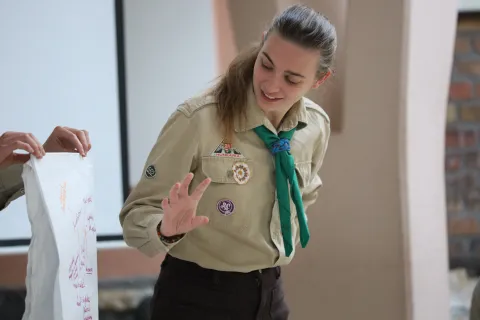
At 27 years old, Ádám had seen a gap that many people had noticed, but few had addressed. While Scouting offers strong educational frameworks for younger age sections, leaders working with Rangers and Rovers (in Hungary, young people aged roughly 16 to 25) often navigate less clearly defined paths. They are supporting teenagers and young adults through major life changes, helping them discover purpose, identity and community, yet specialised training for these leaders was limited.
With support from the Voices of Change’s subgranting National Dialogues programme, he created Rovering to Success, a leadership training weekend designed specifically for young Scout leaders working with Ranger and Rover age groups in Hungary. His idea was simple: before solving challenges, leaders need space to understand them together. But this was not a traditional training course.
The weekend, held in May 2026, combined dialogue, reflection, leadership development, and outdoor experiences along the Danube. Canoes and campfires sat alongside notebooks filled with ideas, conversations about challenges, and plans for action.
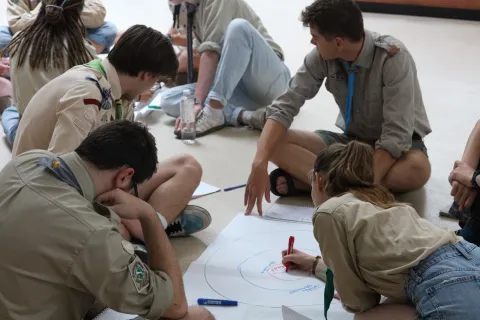
Participants began by talking about something rarely discussed openly: the difficulties of leadership. In small groups, they shared experiences of feeling isolated, facing burnout, or struggling to find methods that worked with older young people. What started as individual stories soon revealed common patterns. They were not alone.
The conversations continued beyond meeting rooms. Alongside the training sessions, participants learned and reflected together while canoeing on the Danube, creating moments of connection that strengthened the peer network emerging throughout the weekend. What began as a training course became something larger: a community.
One participant, who had been considering stepping away from their leadership role, shared during the closing reflection that the experience had changed how they saw their challenges. Instead of feeling overwhelmed by everything they could not change, they identified small, meaningful actions within their reach. That shift brought back a sense of purpose. And that was exactly the impact Ádám hoped to create.
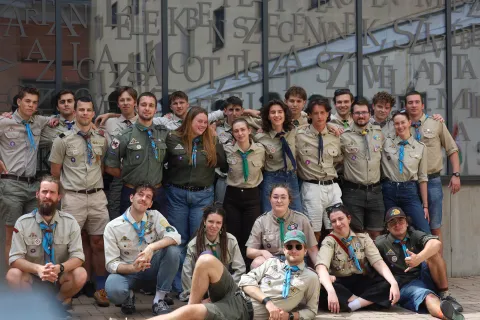
The training gave participants practical tools, greater confidence and a network of peers they could rely on. But its effects reach beyond the leaders themselves. Better supported leaders mean stronger Ranger and Rover programmes, more meaningful experiences for young people and greater retention during an age when many choose to leave youth organisations. The project also created something equally important: proof that solutions can begin at the local level.
Ádám did not wait for someone else to fill the gap he had identified. He listened, brought people together and created a space where leaders could learn from one another. Sometimes, change begins with a new programme. Sometimes, it begins with a conversation. And sometimes, it begins when one young Scout leader decides that seeing a challenge is reason enough to take action.
About Voices of Change
Through the European Scout Region's youth-led Local Actions and National Dialogues grants, young leaders like Carolina are turning ideas into action. By trusting young people to design and lead projects in their own communities, these grants empower them to create meaningful local impact and to develop the skills, confidence and leadership that will continue strengthening Scouting for years to come.
The Voices of Change project is a collaboration between World Scouting and the Erasmus Student Network, with support from Erasmus+, that aims to amplify the voices of young people at the forefront of civic engagement and peacebuilding. By listening to young people and equipping them with the skills and knowledge to take action, the project aims to empower youth where it matters the most: in shaping the future.