Youth voices take centre stage at the European Parliament as Voices of Change concludes
Young people, policymakers and civil society representatives gathered in Brussels to celebrate the achievements of Voices of Change, a European initiative strengthening active citizenship, intercultural dialogue and peace education.
On 3 November 2026, the European Parliament hosted the closing event of Voices of Change, an Erasmus+ -supported project delivered by World Scouting and the Erasmus Student Network (ESN). The gathering marked the conclusion of a project that empowered young people across Europe to contribute to decisions shaping their communities.
Combining World Scouting’s experience in peace education and community engagement with ESN’s work on European citizenship and intercultural exchange, Voices of Change sought to strengthen young people’s ability to respond to societal challenges. Grounded in Peace Education, Voices of Change focused on promoting democratic participation, social inclusion and intercultural dialogue, while equipping young people with the skills and confidence to support underrepresented communities, address polarisation, media literacy and build more inclusive and resilient communities.
Throughout the project, Voices of Change recorded more than 1,700 participants. From Azores to Yerevan, from Riga to Athens, they engaged in the project through youth-led local actions, international trainings and regional gatherings. Alongside these activities, the project reached more than one million people through social media, raising awareness of democratic participation, peacebuilding and the importance of young people's voices.

Beyond the numbers, the project created opportunities for young people to turn ideas into action. In North Macedonia, young Scouts organised educational activities and a youth forum, encouraging their peers to become active contributors to their communities. In Ukraine, young volunteers developed The Scout Choice Board Game, an educational tool promoting empathy, critical thinking and dialogue, now available to ten local Scout groups. The project also produced research, advocacy resources and educational materials to support youth organisations in strengthening civic engagement.
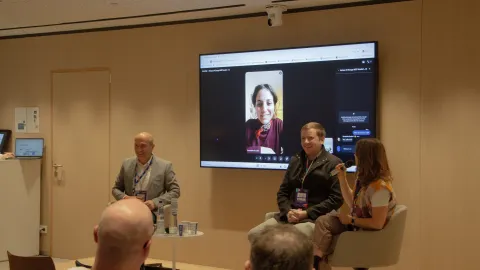
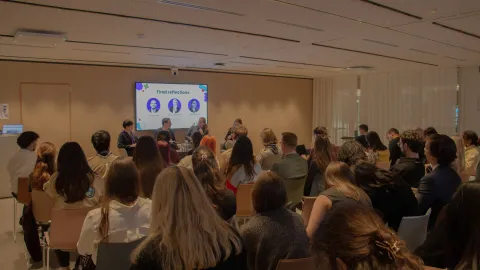
The closing event brought together more than 60 participants, including representatives of European institutions, youth organisations and civil society. Discussions explored how young people can move from being heard to having genuine influence, with a panel discussion followed by interactive conversations on democracy and peacebuilding, digital media, and inclusive youth leadership.
Contributors included Benedetta Scuderi, Member of the European Parliament; Justina Lukaševičiūtė, Attache for Employment, Labour Law and Youth policy; Maria Markkula, board member of the European Youth Forum; Charalampos Papaioannou, Policy Officer at the European Commission; Jarne Buysse, EU Youth Representative at the Flemish Youth Council; Dr Phill Gittins, Education Director at World BEYOND War; and Adeline Hulin, Head of Unit at UNESCO. Representatives from organisations including YMCA Europe, Youth and Environment Europe, LifeLong Learning Platform, the Evens Foundation and Logiq Media also joined the event, alongside World Scouting and ESN's leadership.
Although Voices of Change has formally concluded, its work will continue through the resources developed and the commitment of participating organisations. World Scouting will further advance peace education through a Peace Summit in Geneva in September 2027, while continuing to work with its member organisations to strengthen democratic values and active citizenship among young people.
The discussions in Brussels highlighted the gap between young people's willingness to engage and their sense of being represented in European democracy. According to the 2025 Young Europe study by the TUI Foundation, only 15% of young people feel strongly or very strongly represented by the European Parliament. Discussions also pointed to how access to European institutions and decision-making spaces often remains concentrated among young people with similar backgrounds and opportunities. Bridging this gap requires more than opening institutional doors: it means ensuring young people have the information, knowledge and confidence to walk through them. Non-formal education has an important role to play in this, connecting young people with opportunities to participate at the European level, particularly where formal education does not provide the tools or pathways to access them.
About Voices of Change
Through the European Scout Region's youth-led Local Actions and National Dialogues grants, young leaders like Carolina are turning ideas into action. By trusting young people to design and lead projects in their own communities, these grants empower them to create meaningful local impact and to develop the skills, confidence and leadership that will continue strengthening Scouting for years to come.
The Voices of Change project is a collaboration between World Scouting and the Erasmus Student Network, with support from Erasmus+, that aims to amplify the voices of young people at the forefront of civic engagement and peacebuilding. By listening to young people and equipping them with the skills and knowledge to take action, the project aims to empower youth where it matters the most: in shaping the future.