How one Scout can open the door to Scouting for a new generation
At just 21 years old, Carolina believes that every young person deserves the chance to experience the kind of learning that changes how they see themselves and the world around them.
Growing up in Scouting, Carolina had seen firsthand how the Movement builds confidence, empathy and leadership through experiences that cannot be replicated in a classroom. Campfires become places for conversation, challenges become opportunities to grow, and strangers quickly become teammates. But she also knew that not everyone has the opportunity to discover that world.
With support from the European Scout Region's youth-led Local Actions and National Dialogues grants, Carolina decided to change that.
A member of Associação dos Escoteiros de Portugal, Carolina designed and led Projeto Jovens Ativos (Active Youth Project), an initiative that brought Scouting-inspired non-formal education to children and young people aged 7 to 16 who had never been involved in the Scout Movement. Working closely with local community organisations in Lisbon, she created a space where adventure became a vehicle for inclusion, peace education and personal development.
Rather than simply introducing participants to Scouting, Carolina wanted them to experience it firsthand.
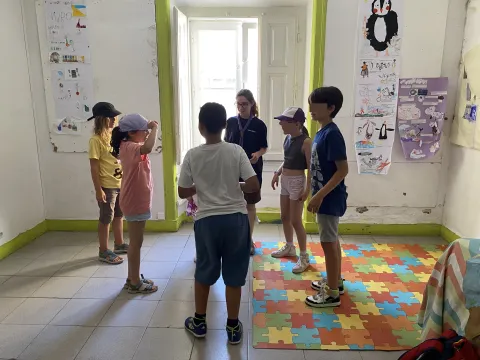
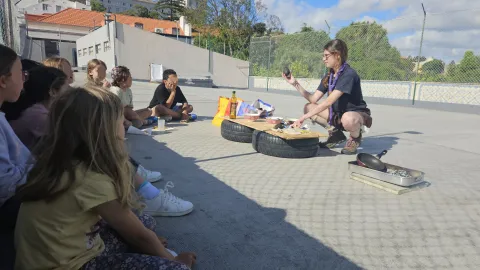
Across six activities, participants pitched tents, cooked together in a field kitchen, explored nature through orientation games, reflected on peace and inequalities, and worked side by side to solve challenges that required cooperation, communication and creativity. Every activity was designed around learning by doing, encouraging participants to discover that leadership, responsibility and empathy grow naturally when people work together.
For many of the participants, it was their first encounter with outdoor education or Scouting. Some came from vulnerable backgrounds, while others faced language barriers that required Carolina and her team to continuously adapt their approach. Creating an environment where everyone felt welcome became just as important as the activities themselves.
That flexibility became one of the project's greatest strengths.
Instead of focusing on delivering a fixed programme, Carolina listened carefully to participants, adjusted activities to their needs and created opportunities for every young person to contribute. As confidence grew, so did their willingness to collaborate, share ideas and take ownership of the experience.
One moment, in particular, captured everything the project set out to achieve.

During a community visit to Associação dos Amigos do Bairro 2 de Maio, the young participants shared an afternoon with elderly residents over coffee and cake. What began as a simple conversation evolved into an honest exchange about childhood, opportunities and hopes for the future.
One elderly woman spoke about the challenges she had faced growing up and encouraged the young people to value their access to education, friendship and safe spaces. In return, the participants reminded her that life never stops offering opportunities to learn, dream and inspire others. It was a conversation built on listening rather than teaching, and on curiosity rather than difference. For Carolina, it demonstrated that peace education is not only learned through workshops or presentations. Sometimes, it begins with listening to someone else's story.
The project left a lasting impact far beyond those conversations. Just as importantly, the experience shaped Carolina's own leadership journey. Leading the project strengthened her confidence as a youth leader and reinforced her belief in the transformative power of non-formal education. Working with young people from different backgrounds challenged her to become more adaptable, more creative and more attentive to the needs of every participant.
About Voices of Change
Through the European Scout Region's youth-led Local Actions and National Dialogues grants, young leaders like Carolina are turning ideas into action. By trusting young people to design and lead projects in their own communities, these grants empower them to create meaningful local impact and to develop the skills, confidence and leadership that will continue strengthening Scouting for years to come.
The Voices of Change project is a collaboration between World Scouting and the Erasmus Student Network, with support from Erasmus+, that aims to amplify the voices of young people at the forefront of civic engagement and peacebuilding. By listening to young people and equipping them with the skills and knowledge to take action, the project aims to empower youth where it matters the most: in shaping the future.