World Scouting receives SDG Achievers Award at the sixth African Youth SDGs Summit
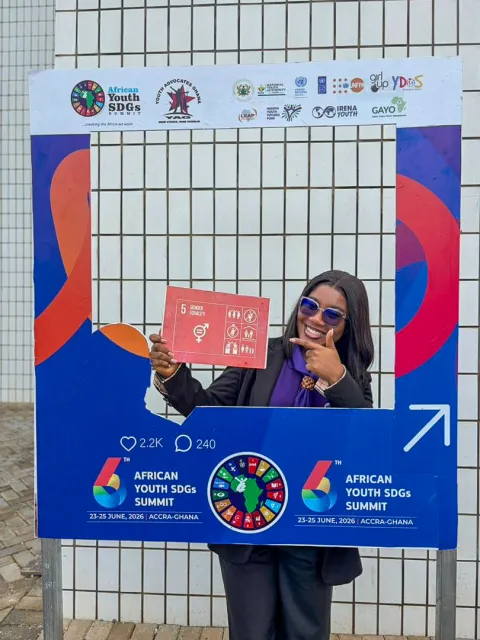
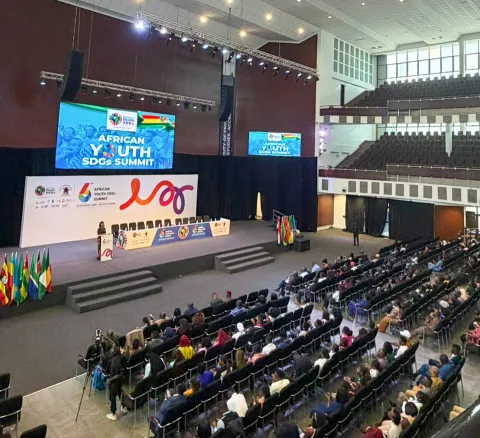
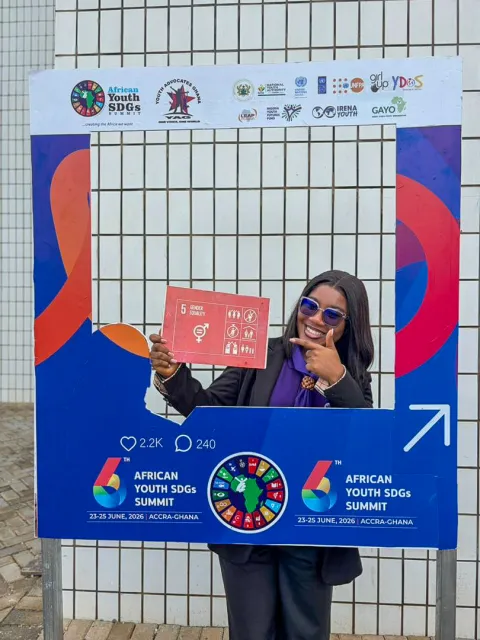
Representing World Scouting, youth representative Emmanuella Seidu joined young leaders, policymakers, civil society organisations and development partners at the sixth African Youth SDGs Summit, held from 23 to 25 June 2026. Participants exchanged ideas and developed recommendations to accelerate progress towards the Sustainable Development Goals across Africa.
In recognition of Scouting’s role in advancing sustainable development across the continent, World Scouting received an SDG Achievers Award. The award recognised Scouting’s contribution beyond awareness-raising and its practical work to translate the Sustainable Development Goals into community action.
Non-formal education as a pathway to sustainable development
At the Summit, Emmanuella highlighted Scouting’s non-formal education approach as a practical tool for advancing sustainable development. Through learning by doing, community service, leadership opportunities and values-based education, Scouting equips young people with the skills and confidence to respond to challenges in their communities.
The Scout educational method enables young people to turn the Sustainable Development Goals into local action. Scouts do not only learn about issues such as climate change, inequality, inclusion and civic participation; they also design and lead projects that address them through initiatives such as Messengers of Peace and Scouts for SDGs.
Bringing young people into policy discussions
A central outcome of the Summit was a stronger call for young people to participate meaningfully in policy processes, moving beyond consultation towards the genuine inclusion of their voices in decision-making. Discussions also emphasised cross-sector partnerships, youth-led innovation, climate action, education, gender equality and inclusive governance.
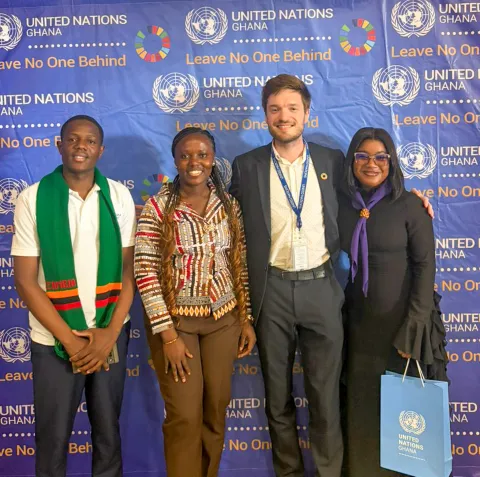
During a consultation led by the United Nations Resident Coordinator’s Office and the United Nations in Ghana, Emmanuella presented policy recommendations on gender equality, social inclusion and youth migration—some of the major challenges facing young people in Africa and beyond. She also called for young people’s recommendations to inform the United Nations’ priorities and partnerships in Ghana from 2027 onwards.
The Summit also created opportunities to connect with other organisations, youth-led networks, civil society organisations and development partners. These relationships can expand opportunities for Scouts to participate in policy dialogue and lead sustainable development initiatives in their communities.
Moving beyond the Summit
Realising the outcomes of the Summit will require the active and meaningful inclusion of young people in policy discussions and decision-making. Scouting’s non-formal education approach, combined with structures that reach communities directly, will help unlock the potential of young people as leaders and partners in sustainable development. Partnerships with World Scouting can also help translate policy commitments into practical, youth-led action at the community level.