Bridging languages and managing millions: How Saudi Scouts supported Hajj pilgrims in 2026
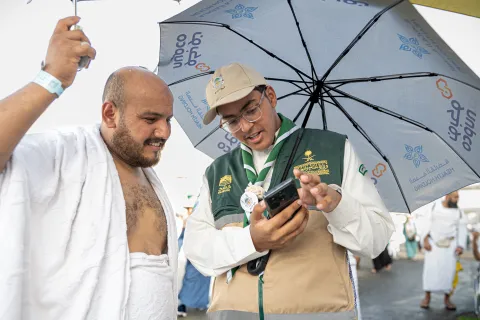
Managing crowds of millions is one of the most complex operational challenges an organisation can face, and this is exactly where the Saudi Arabian Scouts Association provided vital support during this year’s Hajj pilgrimage.
What makes this annual operation unique is its sheer size and scale. The Hajj is the world's largest synchronised annual gathering, welcoming millions of Muslim worshippers to holy sites across Saudi Arabia. According to official government data, roughly 1.7 million pilgrims from over 165 countries took part in the pilgrimage between May and June 2026.
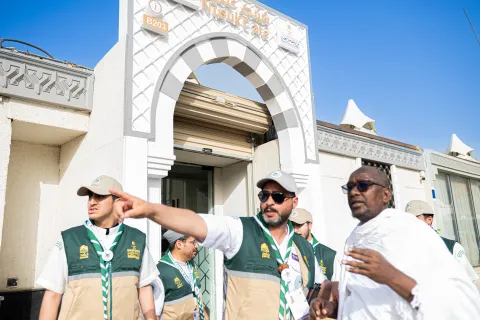
To help manage this massive influx of worshippers — bringing with them a diverse range of cultures and languages — nearly 5,300 men and women from the Saudi Arabian Scouts Association stepped up to support critical logistical operations at airports, health centres, and hospitals, while also providing direct assistance to visitors. Together, they made up around one fifth of the entire volunteer workforce on the ground.
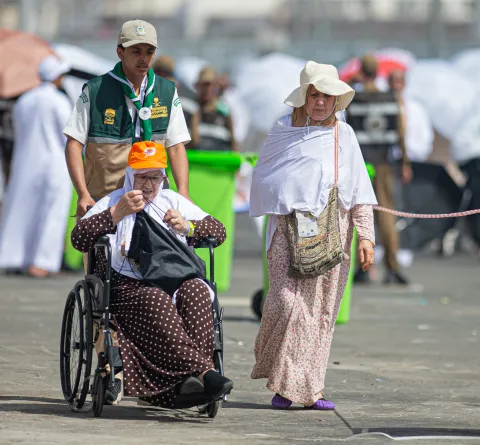
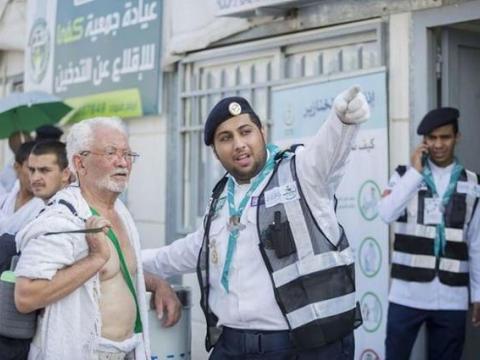
Stationed at 20 sub-camps across Makkah, Madinah, and the ritual sites, Scouts provided vital support throughout the pilgrimage. Trained in multiple languages and non-verbal guiding signs, they helped break down communication barriers by offering directional, guidance, and practical assistance to pilgrims from around the world - reflecting Scouting’s commitment to service, unity, and international friendship.
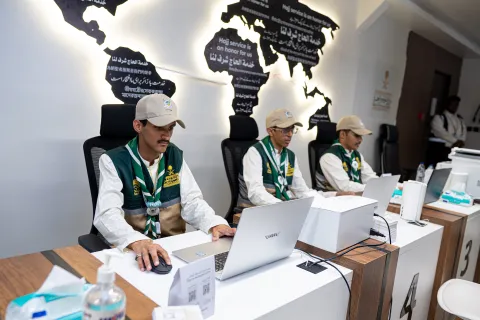
Scouts also made an impact in other areas, with the Association working alongside state agencies and other partners:
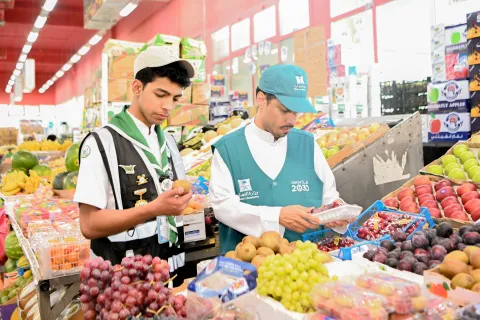
- Supporting government agencies: Scouts supported front-line government services delivered by the Ministries of Hajj and Umrah, Health, Public Security, Commerce, Defence, and the Municipality of the Holy Capital. They helped manage patient flows at hospitals and clinics, and worked with Ministry of Commerce inspection teams to monitor shops, food prices, and food safety measures.
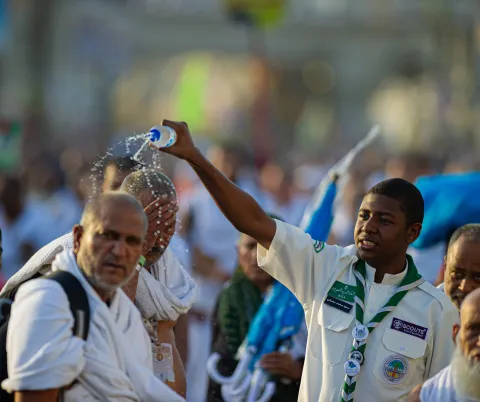
- Logistical support: Amid high temperatures, volunteers distributed water to pilgrims in Madinah and at transport hubs. They also assisted with the large-scale distribution of meat from sacrificial offerings to communities in need, directing crowds and coordinating pedestrian flows to ensure the process was safe, orderly, and efficient.
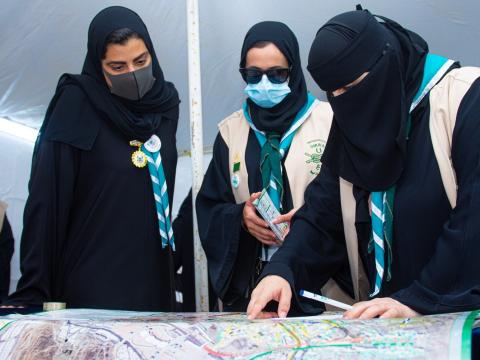
- Tech-driven field planning: Before the official Hajj rituals began, Scouts used advanced mapping technology and artificial intelligence to conduct field surveys of the holy sites. Walking thousands of kilometres, they mapped locations, pathways, and camps, updating digital guiding maps and spatial data. This work ensured that when the crowds arrived, pilgrims who became lost or disoriented were quickly redirected and assisted.
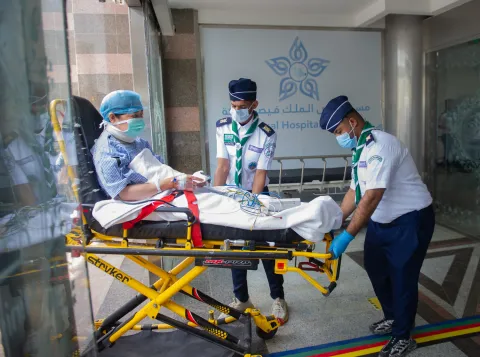
For decades, Scouts have supported the Hajj pilgrims, contributing to an effort that brings together government authorities, volunteers, and communities in the service of millions of pilgrims. For the Scouts themselves, it is an opportunity to put the values of Scouting into practice through meaningful community service on a truly remarkable scale.