Navigating the Infodemic: Youth’s role in a digitalised world
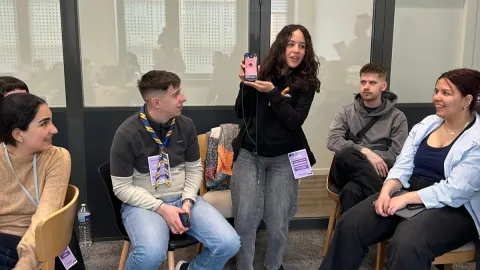
From 26 to 30 March in Paris, France, 30 young people came together for the Innovative Thinking Lab on Fake News, Media and Digital Literacy. Over five days, participants explored how digital media affects understanding, involvement, and trust while reflecting on their role in today’s complex information world. The Lab provided a space for discussion, mutual learning, and thoughtful consideration of the rising problems of false and misleading information.
The event experience focused on a practical approach. In Unmasked: The Disinformation Roleplay, participants acted as both content creators and fact-checkers, discovering how easily information can be altered. This session, along with others like Welcome to the Infodemic, helped participants move from confusion to understanding, building knowledge of how false and misleading information spreads and why it works.
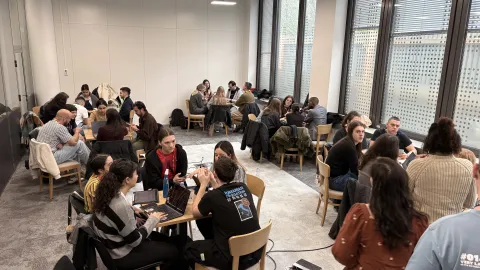
A key moment of the Lab was the contribution of the European Youth Press through The AI Lens, a session led by Editor-in-Chief Bilal Ata Aktas. Framed around the question “Who controls what you believe?”, the session invited participants to critically examine the growing influence of artificial intelligence in shaping information ecosystems. Through an interactive game and live debate, participants explored how generative AI can be used to produce and spread disinformation at scale, how recommender systems prioritise engagement over accuracy, and how echo chambers reinforce existing beliefs. The session provided expert insight and challenged participants to reflect on their own media consumption habits and the broader implications for democratic participation.
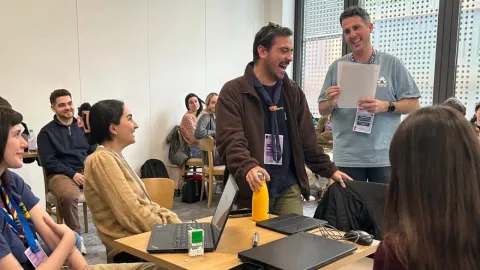
The Lab also emphasised practical skills. Participants learned how to use fact-checking tools, verify digital content, and think critically in everyday situations. These skills proved especially useful in the final part of the Lab, when teams worked together to develop solutions to the problems they had identified. One example was “Vintage Meets Digital,” a project designed to help older people build digital skills and feel more confident, safe, and included online.
The goal is for participants to keep using what they learned, share their knowledge, ask questions about the information they see, and help others do the same. Even small actions can have a big impact, and the work will go on beyond the Lab.
About the Voices of Change project
Organised in the framework of the Voices of Change project, the Innovative Thinking Lab series is a participatory, design-based training format that empowers youth leaders to collaboratively explore complex societal challenges. The first Lab, “Youth Movements in Times of Political Polarisation”, took place in Romania from February 11 to 15, 2026.
The Voices of Change project, a collaboration between World Scouting and the Erasmus Student Network with the support of Erasmus+, aims to amplify the voices of young people at the forefront of civic engagement and peacebuilding. By listening to young people and equipping them with the skills and knowledge to take action, the project aims to empower youth where it matters the most: in shaping the future.