The story of Spilno Hub in Kraków: How Scouts support lives beyond a crisis
On a quiet morning in Kraków, the door to Spilno Hub opens not with urgency but with familiarity. A mother steps inside with her son. They no longer carry the fear of a first arrival, but rather the weight of questions that come with staying. Someone greets them by name. Someone listens.
Spilno Hub Kraków came about through change, the slow, inevitable shift that happens when a crisis stretches into years. On 9 April 2024, the hub officially opened as a space for support, education, and integration. It was created through a partnership between the ZHP Kraków Region and UNICEF Refugee Response Office in Poland, with World Association of Girl Guides and Girl Scouts (WAGGGS) and the Governor of Małopolska Province, Mr. Krzysztof Jan Klęczar, as a project partner. Its mission was clear: to meet the changing needs of refugees and migrants in the Małopolska region while staying deeply connected to the local community.
For Joanna Zubel, Spilno Kraków director and ZHP Project Manager, that mission feels personal. She has been here since the beginning, since the days when help had to be quick, urgent, and lifesaving.
“The Blue Dot was about emergency,” she says, recalling the centre in Kraków that operated until December 2023. People arrived exhausted, frightened, unsure where to go next. The Blue Dot helped them survive the first days, providing from basic support to psychological, protection and legal services.
That shift is what Spilno, which means “Together” in Ukrainian, represents.
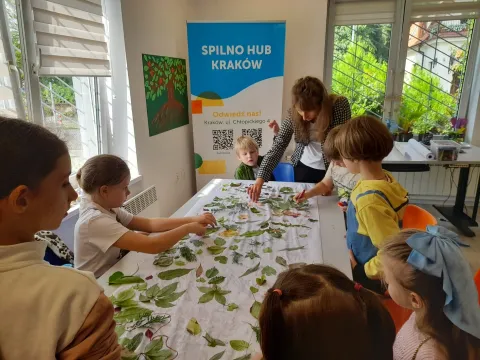
Today, about 20 to 30 people visit the hub each day. Toddlers engage in early development activities while teenagers come together for workshops that help them understand their emotions. Parents consult with psychologists, social workers, or legal advisors. Seniors participate in community activities that help them regain routines disrupted by displacement. Nothing here is one-size-fits-all.
“At both centres, the Blue Dot and now at Spilno, people have always been at the heart of everything we do,” Joanna says. “We build everything around the individual’s needs. We have a psychologist, a social worker, and scheduled support, but it always starts with listening to the person.”
Listening has become essential, especially for children and adolescents. Many of them arrived in Poland years ago, when they were younger. Now they are teenagers, carrying memories of war while facing the challenges of growing up in a new country. The need for long-term psychological support, particularly for young people, has only increased.
What makes Spilno different is who provides that support
Many specialists at the hub are refugee mothers themselves. They sit across from families not as distant professionals but as people who understand loss, uncertainty, and resilience. Their shared experience fosters trust, making those seeking help feel recognised. “I’ve been there” does not need to be spoken. It is already understood.
Behind the scenes, 11 staff members work with around 40 volunteers, including Scouts, students and Ukrainian refugees. This collaboration began in the earliest days of the full-escale invasion in Ukraine. When the conflict escalated, forcing millions to flee, young Scouts quickly mobilised. They distributed food, water, clothing, and information, often working around the clock.

That early collaboration grew into something bigger.
Through UAct, a partnership between the Scout Movement and UNICEF, volunteers supported refugee children and families across Poland, including at Blue Dots. Over time, that emergency response became a commitment to walk alongside families on the long road ahead.
Spilno Hub is the result of that change, a shared space that actively engages the local community and fosters understanding between newcomers and their Polish neighbours. Integration happened here daily through shared activities, conversations, and mutual support.
As the calendar approached 24 February 2026, marking four years since the escalation of the war, the passage of time is hard to ignore. Many of the children Joanna first met, holding their parents’ hands, are now young adults. They have learned Polish, made friends, and dreamed of futures shaped by two countries instead of one. They have grown up with war in the background, but also with people who refused to let them grow up alone.
Spilno Hub Kraków exists because the crisis did not end when the headlines faded. It exists because healing takes longer than escape. And it exists because sometimes, the most powerful form of aid is not given in a moment of urgency, but supported through patience, presence, and listening, day after day, story after story.
On 27 December 2025, Spilno Hub Kraków opened its doors for the last time. “There is still a need to walk alongside them, to keep being there, not only in moments of crisis, but in everyday life, and to strengthen their resilience, so they can shape their future with confidence and a sense of belonging,” Joanna adds. “There is still work to be done. The response does not end here; it evolves. What matters now is not stopping, but adapting, designing new forms of collaboration, new partnerships, and new ways of accompanying young people and families as they continue to rebuild their lives”. Support may change its shape, but the commitment endures: to stay present, to listen, and to move forward together.