How Scouts are leading climate action from coastlines to cloud forests
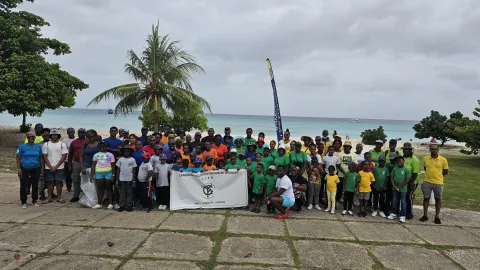
On a Saturday morning in late May 2025, the shores of Browne's Beach in Bridgetown, Barbados, were transformed. Armed with gloves and reusable bags, 181 Scouts and volunteers set to work clearing the shoreline. Hundreds of kilometres away, in the Ecuadorian highlands, another group of Scouts arrived at a neglected park in Quito with shovels and native saplings.
The landscapes could not be more different — but the instinct driving both groups was the same: if not us, who?
These are not isolated moments. They are part of Green Skills for Youth-Led Climate Action, a joint initiative between UNICEF and World Scouting. Supported by grants from the Interamerican Scout Region, the programme challenged National Scout Organisations to move beyond environmental awareness and deliver real, measurable impact through Earth Tribe — World Scouting's framework for youth-led environmental action.
Barbados: cleaning coastlines, growing communities
When the Barbados Boy Scouts Association launched A Greener Barbados: Scouts for Sustainability, they set an ambitious goal: eleven months to clean beaches, teach sustainable gardening, and reforest key areas.
The project kicked off on 31 May 2025 in partnership with the Caribbean Youth Environmental Network. The momentum was immediate. By the project's end, Scouts had restored seven locations — surpassing their original target — and collected 1,236 kilogrammes of waste, nearly 25% more than planned.
Nikolas, a senior Scout member who took part in the beach cleanups, reflected on what he saw: "Much of what we found was single-use plastic, the kind of waste that doesn't need to exist. That's what stayed with me. We can't keep doing this."
The impact went beyond the sand. At Walkers Reserve and Coco Hill, Scouts planted 408 trees to combat soil erosion. In residential areas, they distributed 782 sustainable gardening kits, helping families grow their own food. The project also trained 45 adult leaders to carry this work forward — because sustainability, as these Scouts know, is not a one-day event.
Ecuador: scaling youth action across a nation
In Ecuador, the focus was on scale and systemic change. Through the Champions for Nature Challenge, Scouts Ecuador set out to mobilise the entire country.
A national awareness campaign reached over 34,000 people — nearly ten times the original goal. From April to October, Scout groups carried out 142 community actions. Scouts planted 4,195 trees across 36 locations, eight times their target, and collected over 3,500 kilogrammes of waste.
The flagship Eco-Limpiatón, held on World Clean-Up Day, brought Scout groups into action simultaneously from coast to highlands. It was so successful that Scouts Ecuador has made it an annual national event.
Juan, a local resident whose neighbourhood park was restored during the project, described what he witnessed: "Before, no one used this park. The Scouts came and it changed completely — families, children, everyone started coming back. Seeing even the youngest ones working so hard for something that belonged to all of us… that's not something you forget."
Building skills that last
By integrating Earth Tribe methodologies and design thinking approaches, these projects equipped 200 young leaders with practical skills: the ability to identify environmental problems, design solutions, and bring their communities along.
The trees planted in Quito are growing. The gardening kits distributed in Bridgetown are producing food. And in both countries, thousands of young people have learned something that no workshop alone can teach: that change, when you work for it with your own hands, is possible.